
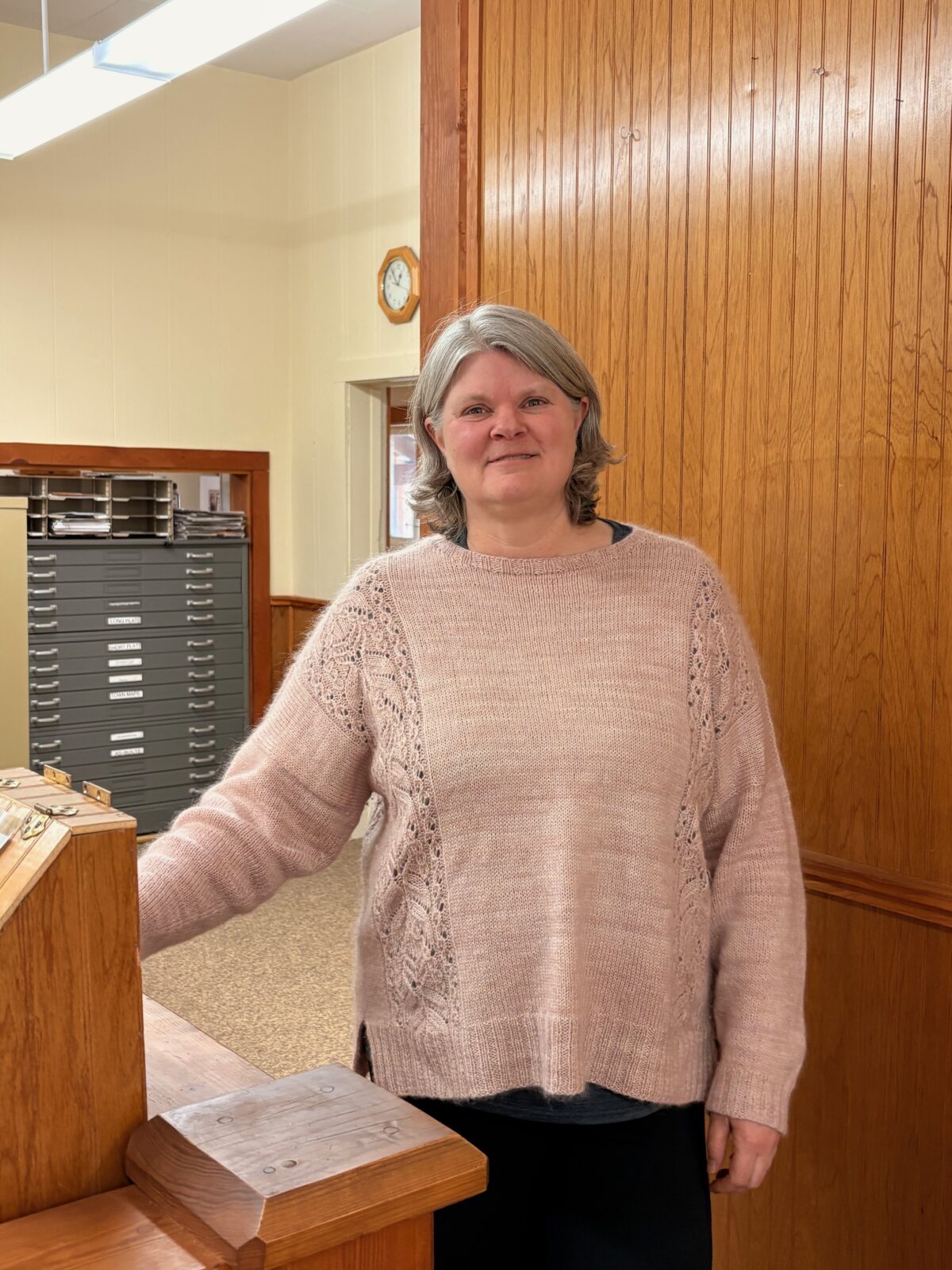
Winthrop Town Planner Rocklynn Culp sat down for an extended interview with MVE to talk about Winthrop’s Housing Action Plan, the Housing Solutions Network, and her desire for a “30,000 foot conversation” about housing.
This interview has been edited for length and clarity.
How’s the Housing Action Plan (HAP) from 2023 going?
We came into the housing action plan during COVID. I think we all collectively saw and experienced alarm. There was a lot of alarm in the community around the rate at which housing was becoming unattainable for local people in the local workforce and people in the local wage realities. There was a lot of pressures from sales of local homes to people that were COVID refugees from other places coming here and there were virtually no rentals on the market. The rentals that were there were booked at inflated prices. We were all seeing houses being sold above asking price. We were experiencing a lot of pressures around housing and there were a couple different local groups that were sort of raising voices from a citizen standpoint. So, our town council was pretty responsive to that issue and was concerned about it. So, they passed the resolution declaring a housing crisis. That predated the Housing Action Plan and was the impetus for putting that task into my workload.
So that resolution authorized the Housing Action Plan and for you to hire Beckwith Consult [which advised on the HAP] to start that process.
It didn’t specifically authorize that. It just said this is a priority issue, and with that being a priority issue, I’m responsive to the mayor and town council for my position. So I said, okay, that’s a priority issue for me to work on because they’ve declared it an urgent state of affairs. There was a lot of statewide alarm around issues related to housing. There were a lot more resources being directed towards that. So we became aware of that grant opportunity [by the Department of Commerce]. In fact, Department of Commerce reached out to us and said there’s this grant opportunity, would you like to apply? And we said, yes, we would, because we were concerned about housing and wanted to have that opportunity to gather information.
Editor’s note: A state grant funded Beckwith Consult to develop separate housing action plans for Winthrop and Twisp.
In the Winthrop Housing Action Plan, it states that Beckwith didn’t do a comprehensive study. Did Beckwith give you a boilerplate?
The initial approach to this thing was that Twisp applied for money, Winthrop applied for money, only we’re trying to align our efforts and kind of work together. That ultimately did not really happen, but we did get through the hiring process together. And so we interviewed the candidates that applied together.
The consultant firms?
[Yes] And we both ended up agreeing [to have the same consulting firm.]
It would have been interesting to have two different firms because then you could see it from different points of view.
We could have, but the idea was that we were going to work together and that there’s going to be some specifics that are different, but we’re kind of in a valley-wide housing market. So, there’s a lot of commonality that could be shared, so, we thought hiring the same consultant would be an effective way to kind of align the parts that could be aligned and then, you know, kind of each have our own flavor to our plans. No discredit to Tom Beckwith, who we hired. He gave a great presentation.
Did you feel it could have been the same presentation to any other small town? The HAP said it wasn’t unique to you.
I think that the presentation he gave obviously was based on his work with some other communities. So, we looked at that and were like, oh, that’s really impressive work. He’s done a lot of these, and so he took a product that worked in another community and plugged it into our community and said, okay, here are the right statistics and here’s blah, blah, blah. The feedback we tried to give him is like, this isn’t quite hitting the itch that we have. For one, the statistics we were concerned about were not very accurate because they’re based on American Community Survey, and if you’re familiar with that, it’s a product out of the Census Bureau, and it falls victim to sampling error issues. For example, it said we were 25% Hispanic and Spanish speaking community; we’re not. We know that’s not accurate. And then, there was income information, household size information. We were just like, this just does not feel right. What happens when you have a sample size of 4 households in a community? It just ends up not being representative, right? At scale, it does, in larger context, but when you’re talking about a community of 500-600 people, it doesn’t. It didn’t work and we kept trying to say these statistics aren’t accurate.
Beckwith didn’t want to do their own survey or pay the money for their own survey?
Well, they did do a survey, but it wasn’t those kind of really detailed demographic statistics. That’s really hard and expensive to do.
And they just didn’t want to do it.
Well, there wasn’t enough budget for them to do it…. I’m not aware of a replicable rule that’s out there that’s kind of, like, plug and play, you know, do your own community survey. There’s ways to do it, but, you know, you’re talking about income information, you’re talking about things that are pretty sensitive. So doing that requires proper statistical modeling to do it correctly.
You would think people’s tax returns at the federal level...
I don’t have access to that. Bottom line, they used the ACS data. We said we don’t think that’s going to get at the information we need. We ended up with a Housing Action Plan from them. It was, you know, really thick, had all kinds of charts and all kinds of information in it, but in the end, our planning commission looked at it and said, that’s just not what we want. We want something digestible, short, that tells a story that we think is accurate about what’s going on in our community and what our needs are.
We used some of the information from his plan, but we did our own distilled kind of version of it. So when it was adopted, we adopted his, but we adopted ours as kind of like- this is what we want you to read. If you want more information, this [Beckwith’s report] is on file.
So according to this Housing Action Plan, you had a hard time surveying low income people. This is who the Housing Action Plan is for, right? Moderate and maybe some from upper moderate and lower income people. There wasn’t enough participation, according to your findings.
The problem that happened during COVID was prices escalated sharply, from a macro angle. Was this somebody thinking, oh, this is a problem, or was it grassroots? You would think that people who are affected by the housing crunch would go to the town council, would come to you and talk to the mayor or go through the nonprofits. Correct me if I’m wrong, but it sounds like somebody was looking at the data and said this is a problem.
I can see where if you just read that, you might get that impression. There were a couple of very active groups. They were running full page ads in the newspaper and they called themselves We Methow, and they were organized. They were coming to both town council meetings. They were very vocal, very concerned about housing and they were very much just a group of local citizens. So, from that standpoint, I recognize that wasn’t captured in there, but that very much was an alive effort.
We were coming out of another thing. I’m not sure to what extent that was captured in there either, but we had the 2014 and 2015 fires. There was a significant loss of housing stock that affected our community. The Methow Valley Long Term Recovery group was already organized and they had identified housing as a particular concern, and that was before COVID.
Housing availability or housing protection from wildfires?
Housing availability as a result of loss of housing because of wildfires. I’ve been doing this job for 20 some years now and I can say the entire time I’ve been here, housing affordability has been a thing that people, the community, talks about. It has been a concern. Since the fires in 2014 and 2015, the urgency and the intensity of the challenge has really ratcheted up in terms of how people talk about it. When you look at the numbers, if you look at the cost, like what the median sale price is year over year over year, I mean, that’s gone up really dramatically in the last 10 years. And, you know, you balance that with what local wages are and it becomes pretty clear that it’s not an attainable product for people.
There are two economies, right? There’s the retirement community, there are the second home owners. So, when you’re building a house that costs half a million to build, because that’s in here [Housing Action Plan] as well, the land and the build is half a million. That’s in 2023. You’re not going to sell it for less than that. As opposed to putting a rambler on your property, like something that’s not, you know, fancy schmancy Methow construction. So it’s two different products. It’s like Whole Foods versus Costco. So I think that’s one thing.
But the other thing is, this isn’t a normal city. It’s not even a city. It’s not a normal environment. So what’s a normal environment? It’s where you have stratification of ages. You have kids and 20 to 45, 45 to 60, whatever. And there’s industry. There are employer bases and there’s a natural healthy growth. It seems to me like this is a retirement community, more or less. One question I had was you’re using a 2% growth rate, but you’re presuming what a typical town would grow, or a particular region would grow, and you’re also using a COVID spike, where people moved out to the rural area, but that’s an anomaly, right? We have no industry. We don’t have timber. We have the forest service. And so, you’re presuming a 2% growth rate, but is it a 2% growth rate in wealthy Seattleites coming to town and buying up properties?
Are you asking if we’ve taken the time to sort of tease apart why we project our growth rates to be higher than they have been historically? Our growth rate is what it is. We’re looking at numbers, we’re looking at how many people live in town. Every year we get an estimate from the Office of Financial Management from the state and they tell us, we think this is your current population over the past year. It comes out every April. So we’re tracking those numbers. We have found them to be pretty accurate. When the census comes around every 10 years, those numbers do a good job of lining up. They’re based on our reporting of building permits and I’m not sure what other reporting, but we trust them that they’re pretty accurate. So when we look at those numbers, year over year over year, for whatever reasons, we are growing faster and that has real implications to us and whether it was an aberration because of COVID or not, it’s real and it predated COVID and it seems to have continued after COVID.
Who are the people that are moving here? Are these younger people, families? Are these retirees? What kind of growth are we talking about?
That’s where it’s hard because we don’t know. We have anecdotal. I could say anecdotally, what we have typically over time, what I’ve seen and I feel confident saying is we are on average an older community than the state average, than the national average.
This affects everything, right? Whether the housing is for one or two people, or are we looking at family housing? And we’re talking about people coming back to the community. These are older senior citizens. These people aren’t coming back.
That is exactly the reason we felt it was important to do this Housing Action Plan and do our best snapshot in time of what we know about the forces and dynamics at work, what the demographic situation was, and then be able to make some determinations or some decisions around what makes sense for us to do as a small community, with limited resources to try and make housing less of a barrier to a vital, economically healthy community.
So the emphasis is on workforce housing, but if your population is not in the workforce, that’s where I’m getting discombobulated.
What I would say about that is, you take your statistical curve and you say, okay, it’s a little bit this way, but it doesn’t mean you don’t have a whole slice of people that are in that demographic, right? So yes, we are on average a little bit older, but we don’t only have old people here, right? So who are the people that are priced out of the market? That’s what we are interested in. Who’s priced out of the market? Not to say that people that are aging and staying here or moving in here don’t have a particular set of needs, but at the snapshot of time that we were doing that, the real crunch that we were hearing about is we were hearing from business owners up and down the boardwalk here saying, we can’t keep employees, because there’s no place for them to live. We were hearing restaurants saying we have to shut down a couple days a week because we can’t keep staff on because there’s no place to live. So that gets out of the realm of, you know, statistics into what people are just reporting.
That could be a sampling error too, right? You’re hearing from businesses. Are you hearing from employees? It could be because employees don’t want to work for 15 bucks or 18 bucks an hour.
There’s a lot of thinking that goes into what is a healthy rental market. You need to have like 6% or something of your stock that is turning over for there to be a healthy rental market. That’s kind of the conventional wisdom. We had less than one percent. I think you would be hard pressed to go and talk to Hank’s, any of the bigger employers, you would hear that everywhere in this community. People were leaving. This is again, anecdotal, but that’s why that We Methow group organically sprang up and they were just a group of citizens and met in the parking lot at the barn.
Where are they now?
That group dematerialized. A lot of things were happening all at once, and I think it’s a credit to this community, and all of the work that all of these different entities did, including some of the work that we did, that have changed the situation. I’m not saying it’s gone away. Housing affordability is still an issue if your wages are this, and that requires that you pay 45% of your household income toward housing. That’s not sustainable.
It also puts pressure on businesses. Businesses aren’t aren’t the only ones that should have a seat at the table. It puts pressure on businesses to raise their wages, right? If the demand is high and supply is low, that would put pressure on businesses to raise their wages. Maybe they don’t want to do that. Maybe they’d rather just have more employees to choose from. I’ll just put that out there.
I don’t feel I have anything to weigh in on.
Okay. So in terms of availability, 2023 had like 60 odd, maybe 68 is some number that stuck in my mind, 68 households, on the waiting list. I believe it was at Housing Trust. The number of units that are being built is way more than 68. You list them here yourself and there’s been more since that time. Wildrose Apartments, Cascade North, Cascade South, Catholic Charities, we’ve got Hank’s [Konrad] buildings coming in. Of course, Methow Housing Trust. In other words, there are more than 68.
Editor’s note: Housing Trust has new developments planned in Heckendorn and Larkspur Flats.
I’m guessing that that number comes from the Housing Trust. Since they ramped up and started collecting applicants, they’ve had 60 plus people in their waiting pool pretty consistently. And they can speak to that. I can’t really speak for them.
Well, it’s not about that. It’s more about the demand. The supply is several hundred units.
The need is 400 and some units.
I’m going to get to that number in a second. The first number is the need, assessing what the need is, not what businesses want, which is a little bit separate. You have more knowledge than I do. You know more background. If you’re saying that you have this many people in demand and you’re building five times as much, there needs to be some explanation to the community about the reasons behind that and that’s not all on you, obviously.
Catholic Charities- I did go to their meetings in Twisp. They have no obligation to house locals. Zero. They’ve said flat out- it would be discriminatory for us not to [consider all applicants]…
That’s Fair Housing.
So, in the community, how is this meeting the goal for local housing?
Is this reporting or is this an opinion piece that you’re working on?
It’s reporting.
Okay. That’d be important for me to know.
Going back to Catholic Charities, if the goal is to support local housing, workforce housing, and they have no responsibility to supply that for locals, that kind of defeats the purpose of why they’re building Catholic Charities. They could build the building, which has a lot of problems to it, frankly, and still not address the issue, right? And so we’ll be around the table again. We’ll be in front of the Winthrop Council or the Twisp Council and behind the table again.
Also, Okanagan County Housing Authority was on the call. They have a waiting list of people from around the county, from Oroville to Grand Coulee to Pateros. What is stopping them from saying, oh, we have housing going in Twisp. Let’s go….
Are you asking me what my opinion is about how we balance assessing the need for housing with how effective the mechanisms that are available to us are?
Sort of, yeah.
I think that calculating an actual housing need is a really tricky thing to do. So, what we did is we went to the methodology, those recommended by the state, and then we tried to kind of ground truth it locally. They have a webpage where they say, this is what we think your housing need is. Again, we looked at that more like, we don’t think that’s quite accurate. So I’m not going to take credit for it. I’m not going to try and defend the numbers that were done because Simon Wendell worked with Julie who works for the Methow Conservancy, and she maintains a pretty rigorous database on the valley wide information on housing and demographic stuff based on the tax assessors database. They did a really deep dive in that and laid out their methodology in their thinking, and that went through the filter of the planning commission and public input. And so what you see in here is the result of that. Is it a perfect number? I don’t think anybody would say that it’s a perfect number. It’s like trying to come up with the best number that could be justified based on existing, reliable, verifiable information.
But you see how the numbers don’t match up?
I don’t know which numbers you’re saying don’t match up.
If Catholic Charities is going to have, I think it’s 78 units of housing, which is, you know, 2 people per unit, it’s 156 people.
Part of what you’re asking is whether or not we’re trying to house a bigger need? If we could put walls and gates around our community, are we housing just what we need or are we housing [more]?
That’s part of the question, yeah.
We have zero control over that. We have freedom of mobility in this country, so we have zero control of that. Population and dynamics are things that happen at a much larger human scale than we have any control over. What we do have control over is looking at the needs of the local housing population. And that was what we tried really to hone in on- what is our community’s actual need? Not a projection based on in-migration, but what we need to have our community securely housed.
If those buildings are housed with people from elsewhere in Okanogan County, how would that serve the needs of local residents in the Methow Valley?
I’m not going to answer that question because I can’t. That is a much bigger issue that every community all across this nation has to deal with because of the Fair Housing Act and because we don’t have gates, and because we have freedom of mobility, and we have all of those things. What could I possibly say about that?
There’s nothing you can say, but it has to be in the back of your mind of like, this is a problem. Housing Trust says you have to live here, right?
I feel like you’re asking me to weigh in on the problem of housing generally and I can talk about it a lot because I’m passionate about it, but that wouldn’t be representing what this work is.
It’s a very specific question, and here’s the question. We have a housing need, I’ll give you that. There are arguments to be made where eventually people find housing. When you first move here, you buddy, you couch surf. Eventually, you’ll find a place to live. There are advertisements in the newspaper. So there’s that argument. But I’ll put that aside and say, okay, there’s a housing need. We are building housing where we are not required to meet that housing need. Like we will, we can, but we’re not required to. Does that create a perplexity for people that are working on this problem?
I mean, obviously it does, and I think, you know, if you talked to any entity that has spent time and effort on housing, I think they would all say we would love to be able to preserve housing units for local population, but then we have the Fair Housing Act that says that is clearly illegal.
So we’re just running on the treadmill is what it feels like.
I guess I have a lot more optimistic view because I feel like these collective efforts that have happened over the past six to 10 years are moving the needle. I feel really good about that. You’re talking about these kind of big, nonprofit, multifamily, low income housing projects. I see the need for them and I applaud them.
My efforts and what we’ve done as a result of the Housing Action Plan isn’t, like, that’s not where my energy is going. Those are not levers I have any control over. So what I have been trying, I say I, but really it’s the town, me as an employee, but the planning commission and the town council has been all in on this. We’ve been looking at the ways in which our regulatory context, you know, what are the realities and what it takes to build a house in Winthrop and how can we make that easier. How can we make sure that we’re maximizing the use of our land, because every foot of pipe costs money, every foot of road we have to build and maintain costs money. We don’t have any control over what it costs for a pipe or a square foot of asphalt, but what we do have control over is what we allow to be built in our town. So we’ve tried to make that easier.
Specifically, we’ve made ADUs, we went initially so you could do one ADU. Now you can do up to two ADUs. We’ve tried to remove constraints from manufactured housing. We’ve tried to clamp down on overnight rentals because what we were seeing was that a lot of our housing stock, every house that would go on the market was being sold for an overnight rental instead of for local housing stock. And so, we’re trying to remove some of the pressure points in the system and make it so that people could use their land productively to house our local population.
Does the town have any projects?
We don’t. That’s not our role. Big municipalities do that, but we don’t. We have very limited things we can do. We can control our zoning code. We can control our subdivision code. We can address how hard or easy it is to get a house constructed for a price that is reasonably affordable. That’s what we can affect. We can’t control what happens as a result of that. That’s a market issue or a nonprofit organization and community issue. We have tried to create the context that makes it easier.
I did talk to the town planner in Twisp a year ago. He wants to triple the size of Twisp. That’s why there are updates to the sewer. He was pretty upfront about it. It wasn’t like I’m teasing it out. My next question was, where are they going to work? And he said, “remotely.”
We do have a really, really high percentage of remote workforce here.
This is all about workforce housing, and yet…
Right. I mean, again, that’s not a lever I, as a town planner, have access to.
But you can invite builders.
Yes, conversations and things that I have done as a result of being tasked by the town council to work on this issue have been sort of a little more like the informal side of that equation.
I would say Winthrop’s position is not, we’re not seeking to grow just for growth’s sake. We’re seeking to make sure that we’re a vital community that can meet the needs of people who live here and work here. I would not say it’s our objective to grow by x amount. Quite the contrary, I would say our focus is on making sure that we are responsive to and able to address impacts that come from growth that happens organically, which is small businesses, people moving here, moving in and out for whatever reasons they do.
This is focused on workforce housing, not second homeowners.
If the question is, am I convinced that we need workforce housing, I would say 100% I am convinced. I’ve been in the room, I’ve been in the conversations consistently over 20 some years. I’ve heard it from all different sectors of our community. I’ve seen there is not a Housing Trust house that has been built that doesn’t have people lined up to get into that house.
So why not have a Housing Trust model as opposed to building units? Your Housing Action Plan report says that people prefer single family over multifamily. That’s what your report says, but your report says it’s not practical given the demand. Like, we hear you, but we can’t abide by this because we have a certain housing need.
There is something to be said about the Housing Trust model- you have a stake in the real estate, so as the real estate appreciates, you can’t appreciate as much as the market, but you’ll have equity in your home, which apartments don’t have. It’s upward mobility.
Well, I think that Beckwith, that was one of the things that he was really good for, referring back to his work with us. He had the perspective of having worked in a whole lot of different communities. Housing isn’t just for one stage of life. It is not a one size fits all solution. People are at different stages of life. They have different incomes, they have different needs, they have different tolerances. So a healthy community has a housing stock that functions for people to ideally grow from, you know, housing that would be suitable when you’re in your early 20s and working a minimum wage job to hopefully later in life when you have kids. A healthy community offers a progression of housing stock.
We have people in this community at all of these different income levels. And frankly, the Housing Trust, their model doesn’t meet the needs of the people that are going to end up in a Wildrose or Catholic Charities, right? Those people don’t have the credit score. There’s no lender out there that’s going to say, I’m going to take a chance on you so that you can have your own four walls and little piece of yard.
I will say this, and this is my opinion, but is based on a lot of depth of reading and learning about this. Our expectations about housing in this country are very much formed by policy decisions that were made decades ago. There’s a direct connection to redlining and the policies when everybody was returning from World War II and there were soldiers, black soldiers that were returning. And there was a whole lot of housing policy that was created to exclude them from the housing market. Well, that didn’t just exclude them. It actually totally changed the whole housing market and created this single family home ideal that you came from war, you had your family, you had your single family home, but if you look around, if that was just a human thing, like that was the way humans house themselves, that would be consistent. You would see that all around the world. You look around the world. That’s not true, right? People house themselves in all kinds of different ways. So there are ways in which policy shapes the way we, our brains develop and the way we think. And that is what, I would say, is an example of the idea that everybody needs to live in a single family home is very much a reflection of decades and decades of US housing policy. There’s my soapbox.
I appreciate that. That’s great. I think that’s really interesting that we form our perceptions about what we want based on what we know.
And so yes, if you ask anybody what they want, I would love five acres by the river. Is that realistic? Can I afford that? No, I cannot. I probably never in my lifetime will be able to. I need to live within my means and within what is real. And, we don’t have that much land for everyone to have five acres on the river. What would it look like if that was what we all got?
Housing Solutions Network. I know you don’t want to speak for them. I totally get that. I don’t expect you to speak for them. I’ve contacted [Housing Trust Executive Director Tom] Venable. They used to have an annual public meeting around February. It has been two years since they’ve had one. I contacted Venable. He doesn’t plan on having one. There’s a lot of secrecy about what’s happening in those meetings. A lot of nonprofit executives are in it.
Editor’s note: Housing Solutions Network describes itself as an informal meeting of top executives of local nonprofit organizations. It is led by Housing Trust.
I wouldn’t say it’s secrecy. There’s not a lot happening. This is just my perspective. I wasn’t one of the organizers of it. I was invited to participate. It was organized by, I think, four or five different nonprofits that were like, we think this is kind of a make or break issue for our community. So we want to pull together people who are all thinking about this and just be a resource for conversations around housing. My involvement was, I showed up occasionally whenever I could for meetings and I did go to those two public sessions.
Do you go there as an employee? That’s paid time for you, right?
Yes.
Twisp is not sending an employee. I know [Twisp Councilmember Tim] Matsui is on there, but he’s going as a private individual.
I’m not going to weigh in. I don’t know what their story is, but they didn’t jump in with both feet, like we’re going to address housing in our community, in the way Winthrop did. I’m not going to say that’s because of me. That’s because this community said we think this is really important and the planning commission listened and the town council listened and so I was told, work on this issue.
Why wasn’t the town planner of Twisp [invited to attend?]
I have no idea. I don’t know.
Mayor Hans Smith said Matsui is acting as a private citizen. He does not have to report anything to him and he does not speak for the town. Nobody reached out to Smith [formally to invite the Twisp town planner.]
If you want to hear my perspective of it, [Housing Solutions Network] was formed in this kind of cauldron. Everywhere you went, people were talking about housing. You’d hear about it everywhere. I say that across the board. Like, if you were here during that time, everybody was talking about housing.
Because of COVID, right? Because everyone was moving in?
Even predating that, coming out of the 2015, 2014 fires, I can’t remember the number of houses that were lost, but it was enough that in a small community, when there’s 30 households without their homes that are looking for a rental, those dynamics, for a small enough community, that has a really direct ripple effect. The costs were rising.
Even pre-COVID, we’ve always been a very attractive community for in migrations. As the online work opportunities were growing, way before COVID, we were already seeing that as a really big influence. And what that did is like people were buying up housing stock and the prices and values of things were going up and that has a run-on effect for the whole community.
But there are options such as buy land and then build on it. You won’t build a half a million dollar home, but you’ll build a [modest home.]
What I would say, I bought my house here in 2000. I’m a single parent on a single income. If I had not bought my house then, at any point in time since then, there is no way I would have. I would have left the community.
Everyone says that though.
It’s true. You should listen to them. I could totally be wrong, but my sense was, and I think it was a widely shared sense, is that this community was feeling a lot of urgency around housing. The Housing Trust had been launched out of the [Methow Valley] Long Term Recovery Group. The Long Term Recovery Group launched a year-long task force that looked at housing and produced a housing needs assessment that was a kind of a valley wide thing. I think that came out in 2016. Coming out of that task force, the consensus was that the quickest and best way to make a difference would be to launch a Housing Trust. So that’s what happened, and then we got into COVID and, like, all of the sense of urgency around it just bubbled up even more. And somewhere in there, there was an idea among different organizations that were talking to each other that it would be great to have this Housing Solutions Network. So there were meetings and I think there were some committees. They came up with kind of a list, which is what you sent me. I have that list, and that’s about it.
Editor’s note: The list, entitled Housing Solutions Network Emerging Solutions- Subcommittee List, is included below.
It does look pretty organized.
It was organized in the sense that people were motivated to try and come up with solutions that they thought would work, and these are just people that are representing different organizations, putting their heads together saying, you know, let’s do some cursory research, and let’s come up with some ideas we think are worth pursuing in our community. So that’s what that list was. I think that and the two public meetings may be the most organization that came out of that.
There was another idea that came out of it that both towns would do, that there would be kind of this roadmap to producing and assessing the housing that was needed, and that evolved into becoming the Housing Action Plans that the two communities did.
So, there was this idea they were just calling it a roadmap, and then we got the grant opportunity. Both towns were like, yeah, let’s do that. The Housing Solutions Network, for the last three or four years, they meet quarterly or something, and it’s literally a small group of people saying, this is what we’re doing. This is what we’re doing. So everybody kind of knows what everyone else is doing.
Correct me if I’m wrong, but the Housing Solutions Network promotes housing.
This is my sense of it- a group of people who do similar work getting together every so often.
Every 2 months?
Yes. Here’s kind of the state of what we’re working on.
Initially it was Methow Housing Trust, Twispworks, Room One, Methow Conservancy, and the Citizens Council were the five entities. I can’t speak to what their conversation was and what led them to organize it, but truly, the last two to three years, five or six people sitting in a room for an hour saying, like, for me, I can give you an example. I would be like, yeah, we’re continuing to work on zoning issues and what that looks like is we’ve implemented a cap on the number of nightly rentals. Or probably one of the most recent things I’ve shared is Winthrop is updating our comprehensive plan from 2015.
One of the most significant conversations I think we need to have is a conversation about how much density our community can tolerate. I’ve said that to them. One of the things that would be valuable is if we had a 30,000 foot conversation as a community, what is our vision for the communities, how are they going to evolve over the next 20 years?
How was that taken?
I attended via zoom. I don’t know.
I didn’t know you guys attend by Zoom.
Some people are in the room and some people are on zoom, but they’re pretty small. Some people are there sometimes and not other times. I only probably go maybe half the time. I could easily cross it off my list if it wasn’t just for sort of having a little bit of face time with people that I know are working [on housing.]
Well, it seems like an important group just based on that list that I’ve seen. The other thing that was kind of concerning is all reference to the Housing Solutions Network has been taken down. It used to be on the Housing Trust website. That was taken down. The website domain name, that was taken down. There have been no public meetings for two years.
I get that you’re looking for the “there there,” but there’s no “there.” There really isn’t.
Okay. There has been resistance to the Heckendorn neighborhood. Twisp Town Hall was packed regarding the Catholic Charities project.
That’s why I think that there needs to be this zoom out conversation where we take the heat out of it. We’re not arguing about Catholic Charity. We’re not arguing about this neighborhood or that neighborhood. We’re having a visioning session of, like, how are we going to accommodate the need in our community?
How is that going to happen?
It’ll happen if I make it happen.
Will you bring it to the Winthrop Town Council, to the new mayor?
If you ask me, my perspective of, like, where is the conversation about housing really happening right now? It’s probably in everybody’s own jurisdictions. It’s not the Housing Solutions Network. I guess if there’s people out there that think that there’s something going on, it would be like if you got together with other people who are reporting and trying to provide media to the valley. And all you were doing is like, I’m working on this. Oh, yeah, I’m working on that. Oh, yeah. Is that a conspiracy? Is that like some group of people trying to do something? No, it’s like this informal network of people who are just trying to stay minimally informed about what’s going on.
Where I see the issue is that I ask Matsui, “Who’s on the Housing Solutions Network?” [He responds] I can’t tell you. It’s okay. I figured it out. I know who most of them are. I wrote an article about it in the News. It’s on record. But, that kind of response where someone asks, who’s in this meeting? I can’t tell you. Oh, okay. You can call each nonprofit [to find out if they are participating]. And then you used to have public meetings at the Grange. That went away. I know you can’t speak for the network, but it doesn’t bring either credibility or trust in an organization that isn’t publicly accountable.
I go to maybe half the meetings that happen and they’re really, truly just pretty minimal at this point. And I think, you know, if you were to ask me why do I think that is or why isn’t it what it was? I think that like I said, I feel like there’s a sense that Catholic Charities is doing what they’re doing, Housing Authority of Okanogan County is doing what they’re doing and Housing Trust is doing what they’re doing. There’s a sense that the really intense urgency has faded. So, everyone’s just doing what they’re doing. And the only reason anyone is still meeting is, like if it wasn’t for that, I wouldn’t know anything at all about what those other entities are working on. It’s so that we all don’t totally lose track of each other and have it be three years before we’ve checked in about what we’re doing.
If you ask, any of the entities that have to go through the gauntlet of public participation, you know, that happens very publicly. That’s my job.
When you have a building construction, the back work has already been done. Now you’re facing it. But what you’re talking about, at the 30,000 foot level, that’s not happening, right? That would be a great opportunity for HSN, right? Gather people at the Grange, have some surveys, have people raise their hands.
That just takes capacity in bandwidth. I think you’re right and that is why I have been saying, my planning commission has heard me say it multiple times and I talk about it every chance I get. I would love to facilitate a bigger conversation where we zoom out and we’re not just fighting about what’s this neighborhood going to be like but we’re talking about how much do the pipes in the ground cost, how much do the roads cost and is it worth everybody having their own single family lot versus figuring out what parts of our community can have a little bit more concentrated housing? And what does that mean? And how do we make those decisions so that they’re made fairly and we’re not just shoving it over there because the least amount of rich people are going to be offended by it.
Well, if you ever have that conversation, let me know.
Well, you should watch for it because it’ll happen. My vision is to have a big meeting at the barn. It’ll take me months to kind of put it together, but I pitched it to the planning commission…. I went to a conference last fall, and I saw a really great example of how it can be done and where they had all these different breakout, like these little tables where you could go and you could kind of have this interaction with a certain part of the issue.
Like having little booths from all the Housing Solution Network people where you could talk to them?
Yeah, and so that’s why I’ve told them because I’m hoping they’ll want to be involved and that it will sort of be some version of that, you know, public.
I think it’s a brave thing for you to do because, you know…
Oh, because I know, I know people who are going to be there and yelling at me.
That’s the risk, right? So, one more thing. Matsui, at a town council meeting, said that Venable asked, what is the dream? How big can we imagine things? I wasn’t sure if that meant how much housing. Like how much can we imagine? And it felt like, again, going back to my initial question, is this organic?
You could look back and look back for that. There was a whole bunch of stuff and then it died.
It’s almost like this intellectual professional [observation], like, let’s look at the data, let’s look at how we want to, not saying that’s the way it is, but like, oh, this is how we want it to be planned. We want this and this and this as opposed to organically like number of people on the list. I would think that would be the first thing, right? That is the most direct thing. Like, how many actual numbers? Because if the numbers are like 20 people and you’re building 78 units. If you’re saying there’s 58 people on your waiting list and you’re building a 100 units.
I think those are important questions, but those are maybe conversations that each entity is having in their circles. We’re not really coming together and having those conversations right now. That was happening, but it’s it’s really happening in the most bare boned way right now.
What I would say is, I was on the board of the Housing Trust from the inception up until last year, a year ago. And so I worked intimately in that space as a board member and I’m in this chair, and I have the intimate experience of being in both of those areas, trying to keep the sort of separation that was needed between the two roles, but there’s obviously a lot of places where they kind of bled over.
My sense of it is they’re very different, very different missions. I work for the town of Winthrop. What are we here for? We’re here to be a safe, vibrant, healthy community, and that’s what my job is, to try and plan for what is our best future for our community and making sure that we’re meeting the basic community needs in terms of what we provide, which is infrastructure. We provide water, sewer, roads. We provide regulations, context, you know, that kind of thing. So that’s my charge in that regard.
Those other entities, they each have their own mission and they’re doing their own thing. So ideally, there’s ways in which we interact so that we are not at cross-purposes, and we’re being helpful, which is why I, for a period of time, was part of the Housing Trust and working for the town of Winthrop, and I was able to say and disclose to both entities, I’m doing this because it helps further the mission that we’ve all agreed on that we need more housing in our community. But, what I would say is that I also have a really strong sense that we’re doing different things.
What I’m trying to do in terms of facilitating public discourse around it, or being the coordinator of a public process around a specific proposal, is very different from what they’re doing, and I just really am not in a position to be able to speak to that or for that. But I do think that if you did that with them, then you would learn more about what they’re saying.
Well, it’s hard, you know? It’s very hard to do that when you don’t have a Housing Solutions Network [that is transparent]. The public is not in on these conversations. So having those annual events where you could have that exchange, and I don’t think one meeting at the barn is going to solve everything.
I think what you’re saying is that there’s more hunger for opportunities for public engagement.
I think that there’s a construction boom right now, and I think you’re absolutely right. I think people are just laying low because they’re just working on their projects, but I think we’re going to come through this again and I think a fair question would be, where have you been the last couple years where you haven’t had these public meetings?
One thing I would say about this and I’m just going to say this candidly. One of the things that I wish people understood is how much personal fortitude it takes to be on the front lines of an issue like this. When the approach is people want to know because they want to be able to throw stones at you, like, it makes sense why each individual entity isn’t in a little bit of a protective stance, because we all only have so much energy to be yelled at.
In my position, I have had more than ample opportunity to have all the arrows shot at me and I know it just does not feel good and it takes every ounce of personal fortitude to keep showing up. If we want people to keep showing up in those spaces, then people need to have a little bit of grace for their community and for all of our humanity. Otherwise, you’re just going to wear down the people who are trying to do the best work in our community.
If I can respond to that, I think there’s a knowledge gap. I think people want to help their fellow human beings, I think there’s a desire for that, but the knowledge gap is like, how is the current infrastructure helping the community? That’s the knowledge gap and that’s where all my questions are coming from, like what’s happening? You know, Catholic Charities, the Fair Housing Act. This is why I think public meetings are so important because I have my set of questions. Somebody else has their set of questions. Otherwise, it feels like it’s imposed upon. And when it feels like it’s imposed upon, like we have the contractor, we have the architect, we have this, we have that, and if you’re like, holy cow, now you’re getting angry because you were never informed of all this. Like, the Heckendorn people were [unaware]. The council had to postpone it because they just heard about this.
If you had data saying, hey, we have 50 people on our waiting list and we’re building 50 units, 50 households for 50 households, people are like, okay, great. That was my question to [former Housing Trust Executive Director] Danica Ready. I said, you’re building more than 50. You want to build a 100 units, but you have 50 on your waiting list. And she’s like, no, no, we want to build 400 units. Housing Action Plan recommends 400 units. And I’m like, how can you [explain that]? She couldn’t. And so then again, explaining the population growth to people.
I tend to look at this from a whole lot of different angles. When I pull myself back and look at it, what you have is we’re just all humans, right? We’re all imperfect. We’re all doing our best, right? And so you have these groups that are trying to respond to a crisis and then you have these people saying, great, but not in my neighborhood. And then you have, you know, it’s like you have all these different forces and pressures at work. They’re all human. Everybody is just doing what we do, right?
I’ve been doing this for a long time now. I’ve got a lot of experience. I’ve been through the gauntlet many times and the reason I’m able to kind of keep coming back to it is that I try and pull out and have grace for everybody that’s involved from their different perspectives. It comes with recognition that this group over here is doing what they, you know, like each organism, whatever the organism is, is doing what it does for its reason and trying to take the shortest path to what it’s trying to do.
The truth is, we could do public input ad nauseum. I feel like that information, like the whole thing that happened up there [Heckendorn], I know that there are people in the neighborhood that have this perspective, but my perspective is that information was out there. It was very public. All these articles were in the newspaper. Everybody was as transparent as they could be.
And at the same time, the Methow Housing Trust is a private landowner. And you know as a private person, if you’re buying land, you don’t owe it to the whole community to be like, this is what I [want to do], while you’re thinking about what you’re going to do. You don’t owe it to the whole community to be like, hey, what do you think I should do?
But you understand where the trust issue comes in.
I do understand it, but I think that it’s more complex. Any developer, no matter who they are, needs to be able to do their thinking, without being like, guess what? We’re going to invite everybody to the table.
And then Sunny M Ranch. The southern tip of Sunny M Ranch, they want [to develop it.]
I can’t speak about it. I don’t know. I don’t know anything about the status of Sunny M…. I feel like a lot of work has been done. We have 50 Housing Trust units that we didn’t have. There’s been some things that have shifted their urgence here.
If there is some resistance to the Housing Solutions Network, it’s because it is so closed that it feels like it lacks public accountability.
My response might be, like I said, everybody is doing what they do. Like I said, I could go or not go to it. The only reason I go occasionally is so I can hear what other people are doing.
I think it’s great that the top executive directors are meeting together regularly, I think is a great idea, whatever it’s about, because these are influential people in our community, and I think they should get together.
I mean, I guess I would say, my job, nothing I do is secret. I’m publicly accountable. That’s the space I operate in, but I can understand, from what I have experienced in this position, why people in other entities that don’t have the same level of public accountability, why they might be a little protective, because it takes so much. I can speak from personal experience, it takes a lot out of me every time I have to go through that.
Well, maybe that resistance means something. Who are they working for? Like, if there’s that much resistance….
What I mean and what I would want for you to hear out of this isn’t that I’m saying anything specific about any of them. What I’m seeing is a personal reflection that I have grace and understanding for the personal toll that it takes to keep trying to do something, to fulfill a mission for what you think is a community good and continue to take negative feedback from people. As a human being, that is a hard thing to do, and so I understand why if any particular entity out there would reflexively take a protective stance when they don’t have to be out there in the thick of it.
I totally understood what you said. What I’m saying is that when they face that much resistance, they have an idea and they’re facing a lot of resistance. They need to examine whether their idea is… they need to just re-examine their idea. How about that? Or back it up with data.
And that’s why I want to print out this staff report. I feel like if you read it, you would see, like, to some extent, we’re never going to get everyone to agree. And I can guarantee you, every single neighborhood that you put a housing development next to is going to have something to say about that and it’s not going to be uniformly positive. People don’t like change.
Editor’s note: Staff report is included below this article.
I hear that. I think we actually do agree. I think we do agree that there needs to be affordable housing. I don’t think that there’s disagreement about that. I think that there’s a gap between how it’s working and who it’s benefiting. For example, every organization has their own list of people on a housing waiting list, but there isn’t a master list. Are these the same people? Are some people on the Housing Authority list the same as the [Catholic] Charities list? If you’re going to spend millions on development, you could know all that.
If anything, what’s happening is I’m just defending my peers that are trying to solve housing problems. If we wait for perfect information to solve problems, the crisis only grows. So I feel like there’s a sense of like, we know where the gaps are, and I can’t speak for any of these entities, but I would say my sense is that each entity is sort of acting with “we have enough information to know that this investment is worthwhile,” because there would be no point in that investment if they’re just going to sit empty. Everybody knows that they’re not going to sit empty.
Well, build it and they will come, right?
I can’t, again, I’m not going to speak to that because fair housing is federal law. It’s not a variable that any of us have control over.
I used to work in housing. I used to work at a homeless shelter. And King County came up with their housing plan, a 10 year plan to end homelessness, and they built and built, and guess what their issue is today? Affordable housing. Despite their building, despite their investment, you know, every nook and cranny. Snohomish County, same thing. I’m a lay person. I am not an expert in this. I’m just an observer, and I’m thinking, build it, and they will come, like, you built it, and they still have a housing affordability crisis. That’s why they have a socialist mayor now in Seattle.
In my lifetime, the population of Earth has doubled. People have to go somewhere, right? I think as humans, we do have a tendency and a preference, for obvious reasons, to want to be housed.
No question about that, but when we talk about community, what does that look like? What is it? You’re talking about three story buildings in this [Housing Action Plan] report. I think that there’s space for, like, what kind of community do we want to live in? And it feels forced when there’s no engagement. I don’t think it’s too much to ask to say, first of all, those people on the waiting list, are they still on the waiting list or did they get housing somewhere else? Did their plans change and they’re no longer looking here? Like, having an accurate list, I think, would go a long way, from my perspective.
[When Housing Trust Executive Director Venable asks] what is what is your vision? That is beyond data. Data’s not even a part of that, right? Because when you say, “what is your vision,” that’s not data centered. That’s like, what is your vision? So I think that’s where the disconnect comes, like, is this really coming from a grassroots need for housing? And maybe it is, but I think it needs to be explained to people.
Well, I think I hear several different threads in there, and I feel like what you’re talking about is really a philosophical issue about how we envision our communities. I guess I would say, having been in this career for quite a while now, almost 30 years, planning is an imperfect art. It’s an imperfect thing. We’re never going to have all of the data. We have problems. We have people that show up in our meeting, saying this is urgent. We need you to address this.
But again, who are these people? Are these the people that need the housing? People that are advocates?
I guess I’m speaking generally. We went through a period of time where we had We Methow. They were speaking for, I’d say, a pretty broad sector of the community, but it was very representative of local working households.
For whatever reasons, there are certain people that will show up at every meeting. They will answer every survey, they will make their voice heard, and there is a vast sum of people that won’t, for a whole host of reasons. Who are those people? We can paint with a broad brush stroke and say, usually the people that have the biggest set of needs are the least likely to show up and talk about those needs.
When Beckwith did a survey of the whole community, it was broadly distributed and there was an incentive for a gift card to Hank’s to respond. We had the checkbox of like, what is your household income? What’s your education? That kind of thing. Who responded? The most educated and the higher income households in this valley.
Okay, here’s a suggestion. You have Chambers of Commerce, right? Ask your Chambers of Commerce- would your employees be willing to fill out a survey? Because those are the people in the service sector jobs, right? Where are the service sector jobs located? Because you know if you have zero income, you’re not going to be eligible for anything. Go to where the people are and just ask the employer, would you be willing to help us with the survey? Because if you’re telling us as a business owner that your people need housing, we need data to show that.
Fair point. I guess there’s really not much point in kind of continuing. I feel confident. I feel like we did the best we could to document it in there. I feel like the housing that’s been created is meeting a need and will make our community healthier.
Well, it’s not going backwards, right? It’s not like what’s already been done. It’s also looking forward to what is this community going to look like? We haven’t even seen all these buildings go up yet. We haven’t even felt the effect. I mean, you have one major intersection here. You probably have to make another intersection somewhere. It’s not about litigating what happened. It’s about moving forward.
You asked about the projection of the growth rate. I would rather project a 3% growth rate and have a little bit more water capacity, a little bit more sewer capacity, a little more road capacity than we need than not have enough and have shortages. I don’t really see a harm. What we’ve tried to do is peg it so that it’s high enough to accommodate what we think would happen if we were at the high end but it’s not the highest end we can imagine. We actually have had 4% or higher than 4% growth rate. So we’re targeting 3% because we think over time that makes the most sense.
And I think you’re approaching it as like, what is the groundswell? What do people need? What does this town need? I think you’re serving the needs of the town, as opposed to when the town planner of Twisp tells me he wants to triple the size of Twisp, that’s from the top down. That’s no longer planning to serve the needs of the community. Now it’s like, this is what I want the town to look like. There’s a huge difference between those two approaches.
I can’t speak to what [Twisp town planner] Thom [Vetter] says.
No, but I want you to know because I want you to have that information because that’s what’s informing my thinking.
I feel like it was a groundswell. Back in that time period, like five years ago, it was on everybody’s mind. People were moving out of the valley because they couldn’t house their families. If you talked to the Chamber of Commerce, you would still hear that they have staffing issues that are largely due to housing. I think that the things that are being done have made and will continue to make a really substantial difference in that and if we have some vacant housing stock, is that a problem? I personally don’t think it’s a problem because I think that can help the costs get back in line with salaries a little bit, right? The way supply and demand works, at least in a really course, broad sense, is that if you have enough supply, prices can become more realistic.
I think there’s a lot of factors here and I like your idea of the 30,000 foot view because we all have different perspectives. If you were to take this table and fill it with index cards, you’d still have a house shortage and still have housing affordability issues. Why? Because each one of those index cards is going to have children that grow up and want to live here. Those index cards are going to have to go like over here. As a town planner, maybe email me, like, where has it ended?
I don’t know. It’s a perpetual thing.
It’s amazing this small town survived, right? I think jobs are key because the job is just the anchor of any place, right? And if you don’t have jobs, then you have a retirement community, which is a weird economy.
There’s unique and weird pressures on us because we are a little bit different. We’re in an amenity driven community. I would not say we’re a retirement community. We have a higher percentage of retirement age people here but we’re not exclusively that. That is a significant sector of the need that we need to be planning for.

Related posts:
 Twisp Development to Grow from 48 to 72 Units, Including Market-Rate Apartments
 Methow Conservancy Looks to Develop Second Parcel for Affordable Housing
 Twisp Planning Commission Approves Plans for 78 Unit Complex by Catholic Charities
 Twisp Town Council Approves Application for Catholic Charities Project