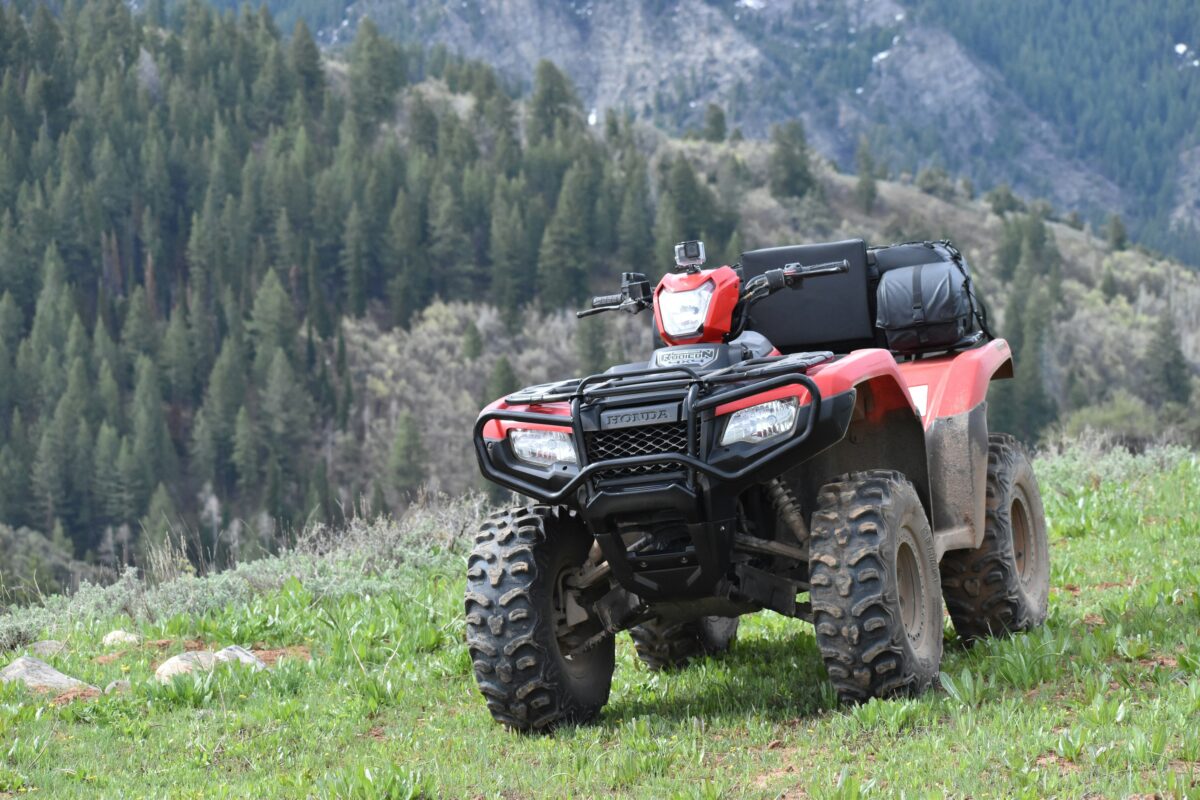
Winthrop may soon allow WATVs within town limits.
Winthrop resident Vern Herrst asked the council to amend the municipal ordinance to allow street legal, licensed WATVs access to businesses in the town of Winthrop. It would not apply to areas outside of town.
WATVs are restricted to roads that have a posted speed limit of 35 mph or under. Herrst said most WATV riders use their vehicles in spring and fall because the roads become too dusty in the summer.
Winthrop Town Council said it would initiate legal review following testimony from WATV owners who complained about the double standard of allowing some street legal vehicles but not others.
Herrst said Twisp and Winthrop remain the only towns in Okanogan, Chelan, Ferry and Douglas counties that don’t allow WATVs.
“Does it really make any difference if it’s a Prius or a WATV that’s taking up that parking space if they’re in a business spending money?” Herrst asked during public comments. “I don’t think it makes any difference to business owners.”
“I’ve got everything on my side by side except windshield wipers and air bags, that you’ve got on your car,” he said. “That’s the only two things you got on your car that I don’t have on my side by side.”
Other residents also expressed dismay by the lack of an ordinance.
“This is a town based on recreation. I’m afraid you’re cutting your nose off to spite your face not allowing WATVs in here,” said Joe Caillier, who noted that his other vehicle is a diesel truck.
John Northcutt, a self-described WATV enthusiast, said he didn’t understand why he couldn’t drive his WATV into town if he was paying taxes on the vehicle and buying license and insurance.
Herrst said the town loses business from people who visit from Okanogan or Omak on WATVs but can’t enter town. They must bring gas with them because they can’t go to a gas station.
In prepared remarks, Herrst went through common complaints about WATVs, including noise and safety.
“Are they any louder than the motorcycles that the town invites into town?” he asked.
In terms of accidents, Herrst said WATVs are not less safe than bicycles. Not allowing WATVs, he said, amounts to discrimination.
“You’re discriminating against a form of recreation, and it sure wouldn’t be good for the town to be known as discriminating against any form of recreation. You encourage recreation, and yet you’re not allowing it,” he said.
Marshall Ty Sheehan said the state taxes street legal WATVs, but leaves it up to counties and municipalities to decide whether to allow them on their roads. By state law, WATVs are de facto prohibited in cities or towns unless said city or town has an ordinance allowing it.
“The RCW, as it’s written, is very poorly written. It should be resolved at the state level,” said Sheehan.
Councilmember Seth Miles said he didn’t see a problem with WATVs.
“I’m under the opinion that it’s not going to be that big of a deal. We have prohibited it, and that’s what has created the big deal about it. There are a number of locals who would appreciate having that opportunity, especially those who live somewhat close to town,” said Miles.
“The speed limit is 35, so even if they do crash, it’s not the most….” he added.
Miles said the idea of WATVs in people’s minds doesn’t match how people use the vehicles locally.
“They look like something you would take out to a racetrack and race. That’s not what they’re going to be used for. I think there’s a stigma in the design and the kind of marketing of them that can make them seem like they’re going to be that way. I think it’s going to be pretty responsible users. It’s going to add some volume to town, yes, but I think those people, a lot of people will be here anyways,” said Miles.
Miles, Councilmember Signe Shaw, and Sheehan agreed a WATV would be better than an F-350 truck that hangs 2 feet into the road. Sheehan said telling tourists WATVs are prohibited in town “creates a difficult situation for us and it leaves people with some hard feelings.”
“And then they do go back to the campground, and then they bring their F-350 that hangs two feet out on the road, and they park that in front of Seth’s restaurant, and we have to deal with the parking issue created by that whereas the WATV would actually fit in there,” said Sheehan.
Sheehan acknowledged that there have been complaints about WATVs, but it has never been about how they were driven.
“Most of the time, [when] we’re dealing with one of the complaints, it’s a legally parked vehicle,” he said.
“People who are gong to drive badly are going to drive badly because they’re doing it on purpose. It’s not the vehicle involved,” said Sheehan.
Councilmember Ed Zuckerman suggested a review after two years to assess the community’s reaction. The council agreed and said the change is worth trying.
The council approved the proposed ordinance going to Winthrop’s attorney for review.